
HVAC Certification in Las Vegas: What You Actually Need
Search for HVAC certification Las Vegas information and you will find a confusing pile of acronyms, courses, and claims. Let us simplify it, because the truth is refreshingly short. First, the law requires one certification. Second, one thing matters more than any certificate, and a handful of extras are worth adding as your career grows. Here is the honest hierarchy.
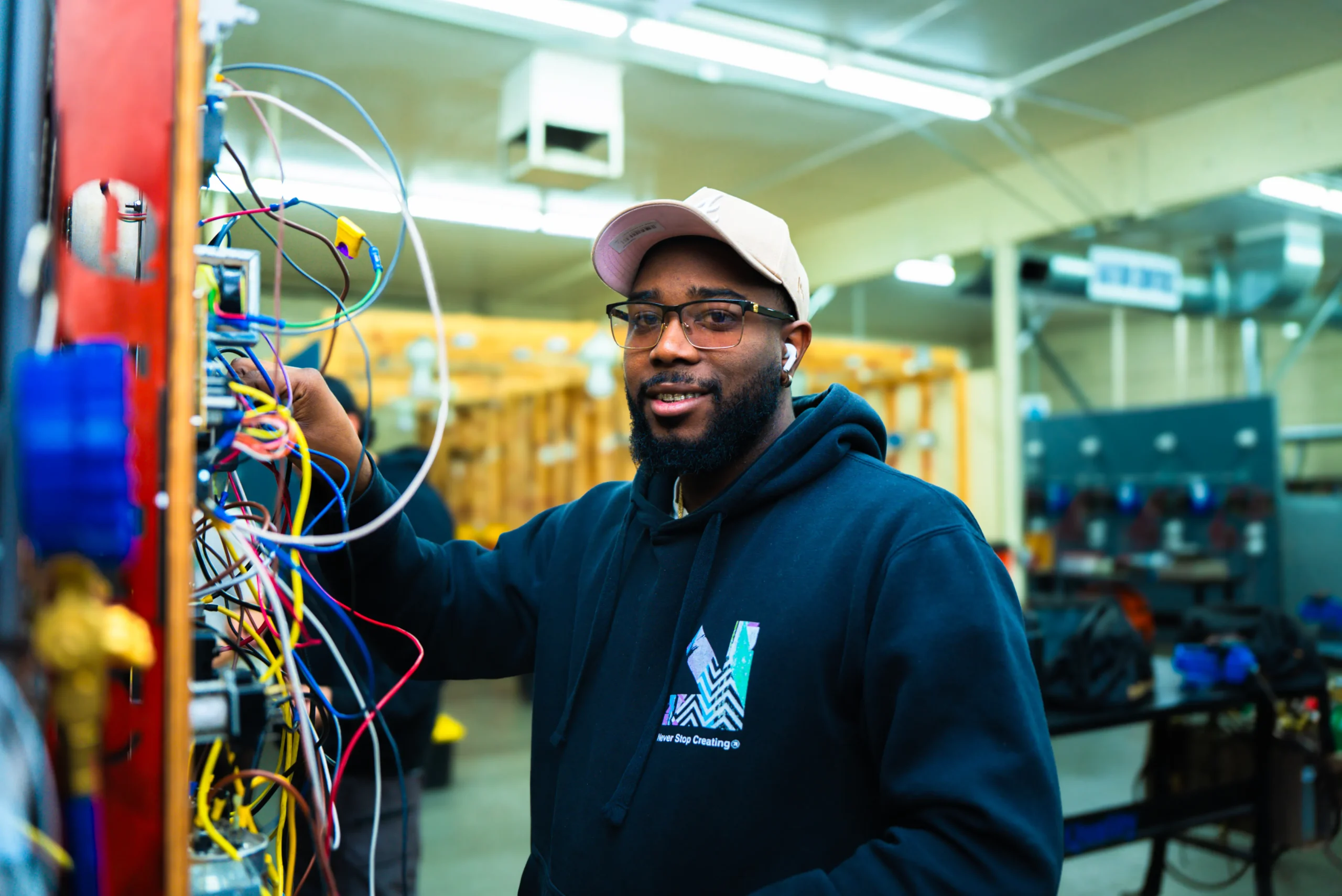
Above: a graduate whose certification-plus-skills combination took him from stuck to hired in about 90 days.
Legally Required: EPA Section 608
Federal law requires Section 608 certification for anyone who handles refrigerants — which means essentially every working HVAC technician. It is a one-time federal credential, valid in all fifty states, with no expiration. This is the non-negotiable, and employers treat it as the entry ticket. Our complete EPA 608 guide breaks down the four types and the exam; the short version is: pursue Universal, prepare hands-on, pass once.
Not Required in Nevada: A State Technician License
Here is what surprises people: Nevada does not require a state license to work as an HVAC service technician for a licensed company. The state licenses contractors — the C-21 classification for businesses performing refrigeration and air conditioning work — not the technicians they employ. Practically, that means your path to employment is training plus EPA 608, not a years-long licensing gauntlet. The contractor license becomes relevant only if you one day launch your own company, a path several of our graduates have taken.
What Employers Weigh More Than Any Paper
Every hiring manager our placement team works with says a version of the same thing: certificates open the conversation; hands cluster the offers. Can you recover refrigerant cleanly, braze a joint that holds, diagnose from gauge readings instead of guessing? Twelve weeks of lab repetition answers that in an interview within minutes — often in a working interview where they hand you a meter and watch. Certification without competence reads instantly as what it is. The pair together is what employers hire.
Worth Adding as You Grow
- NATE certification — the industry’s respected competency credential; many employers pay for it after they hire you, and they pay more once you hold it.
- Manufacturer certifications — Trane, Carrier, Lennox and others certify techs on their equipment lines, often through employer-sponsored training.
- OSHA 10 — a safety card many commercial sites like to see; inexpensive and quick.
- A2L refrigerant readiness — as new refrigerants roll through the industry, techs current on them stand out immediately.
None of these are day-one requirements. They are rungs you add from inside a paying job — usually on an employer’s dime.
The Order of Operations, Simplified
Train hands-on. Earn EPA 608 during training. Get hired with placement assistance. Add NATE and manufacturer credentials as your employer sponsors them. Revisit the contractor license question in a few years if ownership calls. That sequence — the same one in our complete Nevada HVAC guide — front-loads earning and lets the credentials compound while you are already being paid.
Beware the Certification Mills
One consumer warning, offered plainly: some outfits sell stacks of impressive-sounding certificates with minimal hands-on training behind them. Employers know the difference, and a wall of paper cannot survive first contact with a dead compressor. Judge any program by its lab hours and instructors — the standards in our guide to choosing a trade school — and treat certificates as the receipt for skills, never the substitute.
How Certification Fits a 12-Week Timeline
A common worry: “do I have to finish school and then study for months more?” No — the timeline nests. We weave refrigerant handling, recovery, and the rules behind them through the lab work from the early weeks, so by the time the exam window arrives you are reviewing what your hands already know rather than cramming strangers’ facts. Students typically sit the proctored exam near the end of the program or shortly after, meaning the credential and the diploma arrive nearly together — and job applications go out with both attached.
What to Bring to Your First Interview
When the certification is fresh and the lab hours are real, the interview package almost writes itself: the EPA 608 card, a resume that names the equipment you trained on, and — the quiet differentiator — the ability to talk through a diagnostic sequence out loud when asked. Hiring managers listen for process: what would you check first on a no-cool call, and why. Employers remember graduates who can answer in the language of superheat and static pressure. That fluency is what the 12 weeks actually purchase; the card just proves it to strangers.
Frequently Asked Questions
What certification do I need to work in HVAC in Las Vegas?
One: EPA Section 608 certification, required by federal law for anyone handling refrigerants. Nevada does not require a separate state license to work as a technician for a licensed company — the state licenses contractors, not their employees.
How long does it take to get HVAC certified in Las Vegas?
EPA 608 preparation is built into the 12-week Quality Training Centers HVAC program, so most students earn the certification during or immediately after training — no separate course required.
Is NATE certification required to get hired?
No. NATE is a respected mid-career credential that raises pay and credibility, and employers frequently sponsor it after hiring. Focus first on EPA 608 plus hands-on competence.
Do HVAC certifications expire?
EPA 608 does not expire. Some optional credentials like NATE involve renewal cycles, typically supported by employers as part of ongoing training.
What does HVAC certification cost?
At Quality Training Centers, tuition includes exam preparation. Moreover, that tuition is itself a fraction of what most Las Vegas programs charge, rather than sold as a separate course. Ask admissions for current program details.
Get Certified the Way Employers Respect
Tour the campus, see the equipment your certification prep happens on, and talk with instructors who have proctored this journey for decades. With financing for nearly every situation and tuition a fraction of the Las Vegas norm, the credential that unlocks this career is closer than the acronym soup made it look.
