
Evening Trade School Classes: Training for a New Career Without Quitting Your Job
The single most career-saving feature in trade education is also the least glamorous: the clock. Evening trade school classes exist because the people who most need a career change are, almost by definition, employed. After all, quitting a paycheck to chase a better one is a plan most households cannot sign. Here is how the evening path works and who thrives on it. Also, here is the honest survival guide for twelve weeks of double duty.
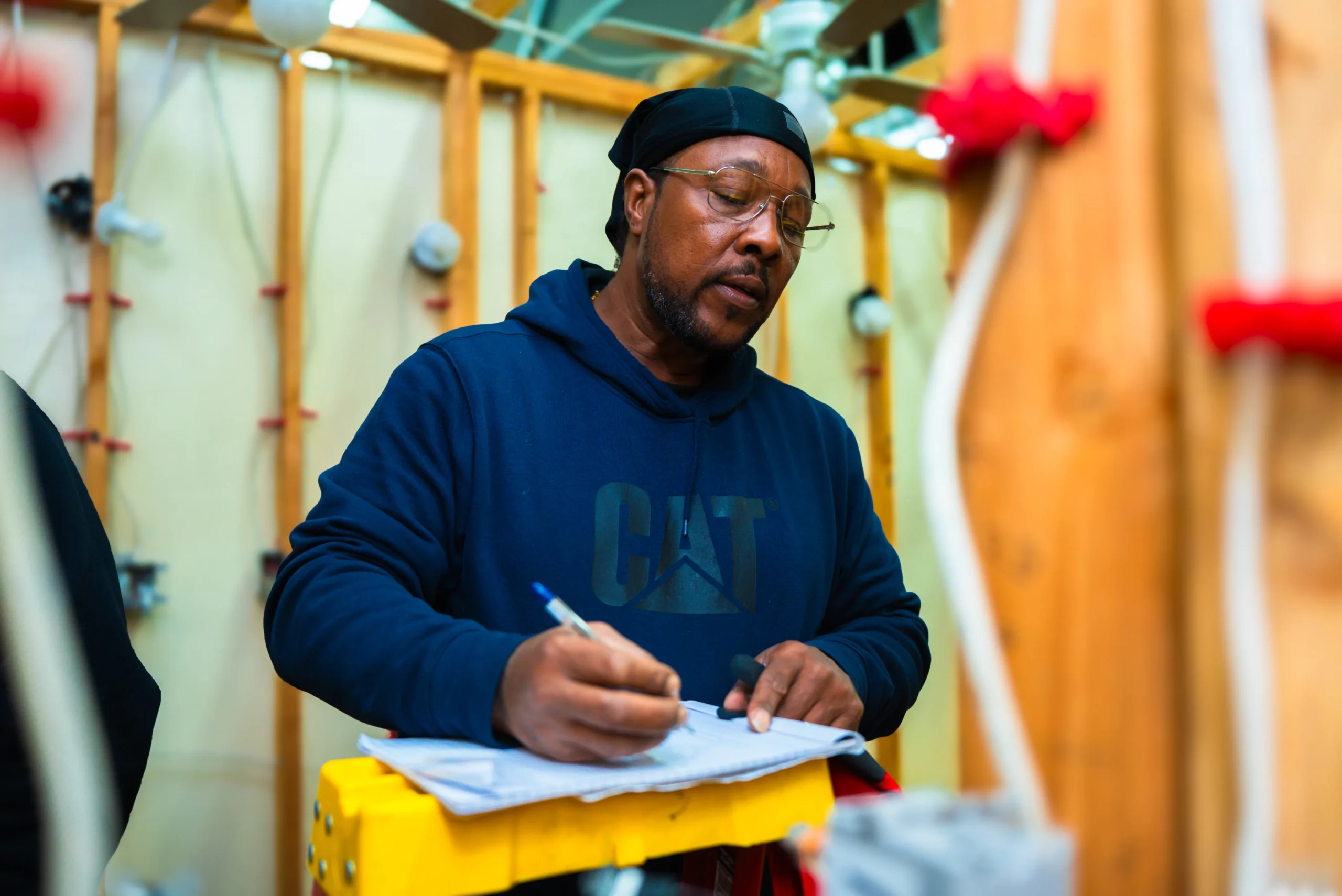
Above: a graduate who trained around full-time warehouse shifts — the evening path with a face on it.
How the Schedule Actually Works
Our programs run morning and evening sessions precisely so work and training can coexist. Day-shift workers train evenings. Meanwhile, night-shift and hospitality workers — a Las Vegas specialty — train mornings, and the 12-week clock runs identically either way. Same labs, same instructors, same certification prep, same placement assistance. The evening cohort is not the junior varsity. In fact, it is frequently the more motivated room, because everyone in it paid for their seat twice — once in tuition, once in fatigue.
The Twelve-Week Survival Pattern
The career-changer playbook sketched the composite week; here is the evening-specific version graduates describe. Weeks 1–3 are the adjustment shock. They bring calendar triage, meal prep, and the discovery that television was consuming ten hours you now reclaim. Then weeks 4–8 are the groove. The routine normalizes, lab skills compound, and the job you are leaving gets strangely easier to tolerate — exit velocity does that. Weeks 9–12 are the downhill: interviews begin (often before graduation), the finish line does the motivating, and the tired has a date stamp on it.
What the Double Load Actually Buys
Run the alternative honestly: quit-and-train costs three months of income plus the psychological cliff of no safety net; evening training costs three months of leisure. For most households that is not a close call — and the income-preserved path keeps every funding option gentler, since financing sized against an active paycheck stresses nobody. The forklift graduate in the episode above kept his warehouse income to the final week, then stepped across the bridge without a single unpaid day. That is the design working as intended.
Who Thrives on the Evening Path
Three traits predict evening-cohort success, and none is youth or genius: a calendar spine (the students who schedule study blocks keep them; the ones who “find time” never find it), a recruited household (the family conversation handled before week one, so the crockpot and the quiet hours are team efforts), and a reason taped somewhere visible — the kids, the ceiling, the number from the calculator. Twelve weeks is short enough to white-knuckle but long enough that systems beat willpower.
Employers Read Evening Graduates Loudly
Here is the ending nobody expects: the double-duty season becomes the resume’s best line. An applicant who held a full-time job while completing an intensive lab program has pre-answered every reliability question an employer carries — work ethic, time management, follow-through, all demonstrated rather than claimed (the evidence resume writes itself). Our placement team makes sure hiring managers notice, and hiring managers — many of whom trained the same way — notice hard.
An Evening Student’s Tuesday, Reconstructed
The composite Tuesday graduates describe: day shift until late afternoon, protein and a shower, class and lab through the evening — hands on equipment while the day job’s stress evaporates into something useful — then home for the quiet hour: review notes, prep tomorrow’s lunch, sleep. Repeat with variations, three to four times weekly, for one season. Nobody calls it easy; everybody calls it doable; and the strange secret most report is that the training evenings became the best part of the day — the hours that pointed somewhere.
The Shift-Work City Advantage
Las Vegas’s round-the-clock economy makes it, oddly, the best city in America for schedule-flexible training: casino and hospitality workers with mid-week “weekends” use morning cohorts; graveyard workers train after sleep; gig drivers throttle their apps around lab nights. The trades this city runs on are learnable around the schedules this city runs on — a symmetry our morning-and-evening grid was built to serve. Whatever your shift, there is a cohort shaped like it; ask admissions for the current grid.
Guarding the Season’s Edges
Two boundary rules keep the twelve weeks intact. Guard the sleep edge: the temptation to reclaim leisure at midnight costs more than it returns — tired hands learn slower, and lab time is the season’s most valuable currency. Guard the finish: weeks ten through twelve are where fatigue whispers that the certificate can wait; it is also when interviews arrive and the whole investment converts. Evening students who protect those two edges finish at the same rates as anyone — and walk into offers carrying the strongest reliability story in the applicant pool.
Frequently Asked Questions
Can I go to trade school while working full-time?
Yes — morning and evening schedules exist precisely for working adults, and most Quality Training Centers career-change students keep their income through all 12 weeks. Plan for one demanding season, not a lifestyle overhaul.
How many hours are evening trade school classes?
Sessions run several evenings per week for the 12-week program, with the same labs, instructors, and certification preparation as morning cohorts. Admissions can walk you through the current schedule grid for each program.
Is evening trade school harder than quitting to study?
It is more tiring and less risky: you trade leisure hours instead of income, keep financing stress low, and graduate with an unbroken work history — which employers read as proof of reliability.
What helps evening students succeed?
Systems over willpower: scheduled study blocks, a household recruited in advance, meal prep, and a visible reason for the season. The finish line is dated — 12 weeks — which makes the discipline sustainable.
Your Evenings Are Worth More Than You Are Getting for Them
Twelve weeks of evenings, traded for a different decade. Tour the campus — evening visits welcome, obviously — compare the HVAC and electrical schedules against your shift, and claim the seat the employed version of you has been eyeing. Since 1994, at a fraction of the usual Las Vegas tuition.
