
QTC FLEX or On-Campus? How to Pick Your Path at Quality Training Centers
Quality Training Centers now has two doors into the same trade: the on-campus program that’s run since 1994, and QTC FLEX, the hybrid option where your coursework happens online and your hands-on work happens in our labs. Prospective students ask us which one is better almost every day, and the honest answer is that it’s the wrong question. Neither is better. One of them fits your life and one of them doesn’t, and picking wrong costs you momentum you can’t get back. This guide exists so you pick right the first time.
We’ll lay out what’s identical, what’s genuinely different, and — because this is how we do things here — who each path is NOT for.
What’s identical, no matter which door you pick
Start here, because this is the part most people get wrong. FLEX is not a lighter version of the school. Both paths run on the same spine:
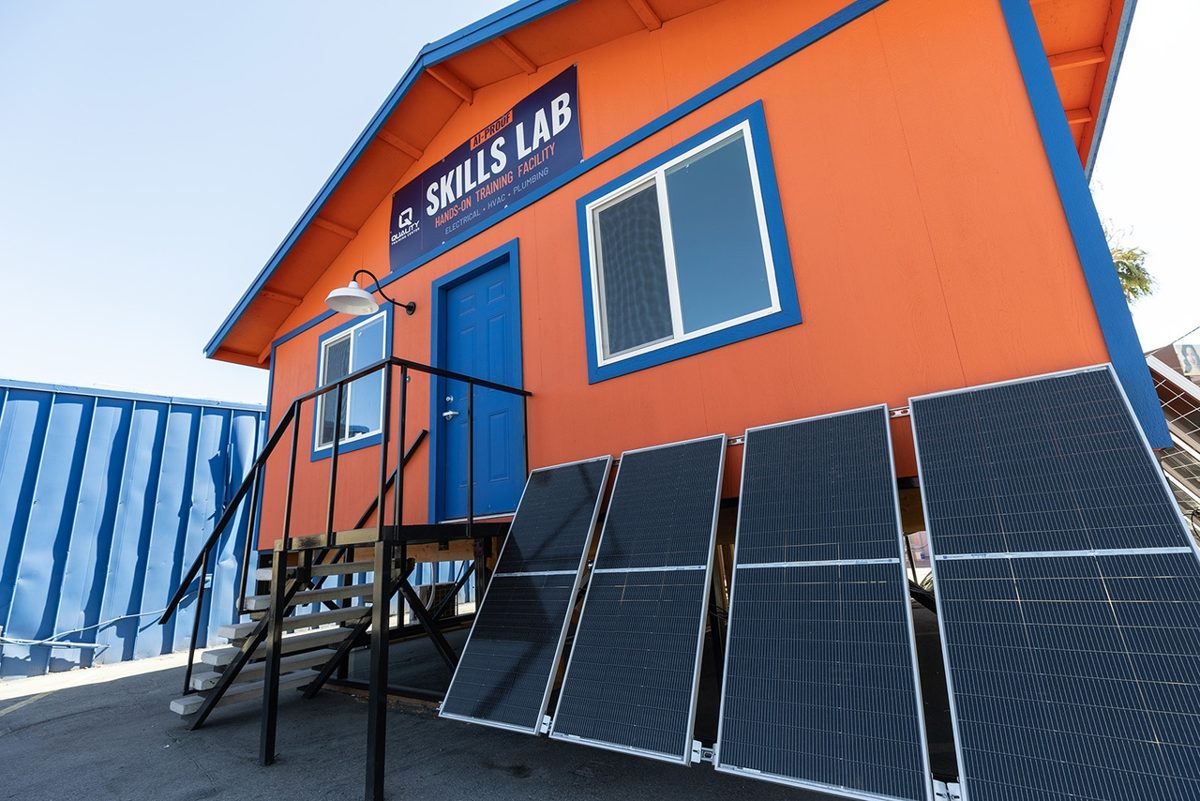
- The same labs. Every FLEX student does their hands-on work in the same 16,000+ square feet of labs our on-campus students train in — the same wiring bays, the same condensing units, the same brazing stations. There is no “online version” of putting gauges on a system, and we wouldn’t sell you one.
- The same instructors and the same bar. In both formats, a skill counts when an instructor watches you do it and signs off. FLEX students book lab time and demonstrate each core competency in person, one skill at a time. Nobody graduates either path because they watched videos.
- The same credential. Your certificate doesn’t say which format you chose, and no employer will ask. What they’ll ask is whether you can do the work.
- The same support after. Lifetime placement assistance through our 200+ employer network, and the same standing promise: once a student, always a student. Graduates of either path can come back and repeat modules when they need a refresher.
Instruction in both formats is in English, and our staff supports students in Spanish — clases en inglés, te atendemos en español.
What’s actually different: the clock
The on-campus program is a structured sprint: about 12 weeks, four days a week, with a cohort that starts together and instructors in front of you every class day. You know exactly when it starts and roughly when you’ll finish, and the schedule drags you forward on the days your motivation doesn’t.
QTC FLEX throws out the calendar. Your coursework lives online and moves at your pace — after your shift, after the kids are down, on your days off. When the coursework calls for hands-on practice, you book time in the lab and come in. Push hard and move fast, or give yourself room around a full-time job. There’s no cohort to keep up with and no cohort to wait for. The program bends around your life instead of asking your life to bend around the program.
That’s the entire difference. Same destination, different clock. Which means the real question isn’t about the programs at all — it’s about you.
| On-Campus | QTC FLEX | |
|---|---|---|
| Schedule | Set schedule — about 12 weeks, four days a week | Self-paced — you set the clock |
| Coursework | In the classroom with your cohort | Online, whenever your life allows |
| Hands-on labs | Built into the class day | You book lab time on campus |
| Instructor check-offs | In person, same bar | In person, same bar |
| VA education benefits | Approved | Not approved for VA students |
| Tuition | $8,900 all-in — books, tools, EPA exam included | All-in pricing — ask admissions |
| Built for | People who want structure and the fastest predictable finish | Full-time workers, parents, proven self-starters |
Choose on-campus if this sounds like you
You want the structure. Some people are honest enough with themselves to know that “self-paced” would become “no-paced” by week three. If a set schedule, classmates moving with you, and an instructor noticing when you’re absent are what push you to the finish line, that structure is worth more than any amount of flexibility. That’s not a weakness — it’s self-knowledge, and it describes a lot of our most successful graduates.
You’re using VA education benefits. This one’s not a preference — it’s a rule, and we’d rather you hear it from us before you plan around it: QTC FLEX is not approved for VA students. If you’re using VA education benefits, the on-campus programs are where they apply. Our student finance team walks veterans through the paperwork every week; start with our military and veterans page and come talk to us.
You want the fastest predictable finish. On-campus has a known shape: roughly 12 weeks after you start, you’re done. If you’re between jobs and need to be earning in a trade as soon as possible, the sprint usually beats the stroll.
You learn by asking in the moment. Four days a week in the building means your question gets answered while your hands are still on the equipment. Some people learn twice as fast that way. If that’s you, take the classroom.
Choose FLEX if this sounds like you
You can’t quit your job — and shouldn’t. This is the person FLEX was built for. If you’re working full time, especially rotating shifts on the Strip or in a warehouse, a fixed class schedule four days a week may be flatly impossible. FLEX turns “I can’t make the schedule work” into “I do coursework when I’m off and book lab time when I have coverage.” (If your work schedule is steady but just daytime, our evening class options are a third answer worth knowing about.)
You’re raising kids. Coursework after bedtime is a real study plan. Thousands of parents have earned credentials exactly that way, and FLEX makes the lab side bookable around childcare instead of colliding with it.
You’re a self-starter with receipts. Not “I think I’d be disciplined” — actual evidence: you’ve finished things on your own before, held a second job, trained for something, built something nights and weekends. FLEX rewards that kind of person generously.
The commute is the dealbreaker. If you’re coming from Boulder City or the far north valley, four round trips a week for 12 weeks is a real cost. FLEX cuts the driving down to your scheduled lab sessions.

The honest warning about self-paced
Here’s the part a sales brochure would skip. The freedom in FLEX is also the risk in FLEX. Nobody calls you when you skip a week. The structure that drags an on-campus student across the finish line isn’t there — you are the structure. Self-paced programs everywhere, in every industry, lose the people who mistake flexibility for ease.
And to be clear: FLEX is not easier. The coursework is the same material. The competency check-offs are the same bar, judged by the same instructors, on the same equipment. You cannot coast through it, because the whole design ends at an instructor watching your hands. The only thing FLEX removes is the calendar. If deep down you need the calendar, respect that about yourself and enroll on campus. We’d rather tell you that today than watch you stall in month four.
What they cost
The on-campus programs are $8,900 all-in — tuition, books, tools, and the EPA 608 exam for HVAC students, tested right on campus, with no surprise fees at the end. FLEX follows the same all-in philosophy: everything included, nothing bolted on later. For current FLEX tuition, talk to our admissions team — and either way, there are plenty of ways to pay, laid out on our student financing page.
Still deciding? Do what smart students do
Come stand in the lab. Every week we watch someone walk in certain they wanted FLEX and leave enrolled on campus, or the reverse — because seeing the labs, meeting the instructors, and talking through your actual work schedule answers the question faster than any article can. Read the deeper dives on how the hybrid model works and the benefits of flexible training, look at the HVAC and electrical programs — then come see it in person.
Frequently Asked Questions
Is QTC FLEX easier than the on-campus program?
No. Same coursework, same hands-on competency check-offs, same instructors signing off on the same equipment. FLEX removes the fixed schedule, not the standard. If anything, it demands more discipline, because the calendar isn’t there to push you.
Can I switch between FLEX and on-campus if I chose wrong?
Talk to admissions about your specific situation — the goal is getting you through the program, not trapping you in a format. The better move is choosing right the first time, which is exactly what a campus tour and an honest conversation about your schedule are for.
Can I use VA education benefits for QTC FLEX?
No. FLEX is not approved for VA students. VA education benefits apply to our on-campus programs, and our student finance team helps veterans through that process every week.
Is FLEX fully online?
No — and be suspicious of any trade program that is. Your classroom instruction is online; your hands-on training and instructor check-offs happen in person in our Las Vegas labs. That in-person portion is what makes the credential worth something to an employer.
How long does QTC FLEX take to finish?
It’s self-paced, so it depends on the hours you put in. Students with more time move quickly; students fitting it around full-time work take longer, on purpose. The on-campus program, by contrast, runs on a set schedule of about 12 weeks.
Two doors, one trade. The honest way to pick yours is to stand in the building and ask us the hard questions in person. Schedule a tour — it takes an hour, and you’ll leave knowing which door is yours.
