
Careers AI Can’t Replace: Why the Trades Are the Safest Bet of 2026
A strange thing happened on the way to the future. The careers everyone called “safe” — office work, analysis, content, entry-level coding — became the ones AI learned first. Meanwhile, the work once dismissed as old-fashioned became the fortress. If you are hunting for AI-proof careers in 2026, the skilled trades top nearly every serious list. So this episode of our podcast digs into why:
Why AI Keeps Missing the Trades
AI is spectacular at patterns in data and text. It remains hopeless at crawling through a 120°F attic or diagnosing a rattling compressor by ear. It cannot braze a joint in a cramped closet. It also cannot reassure the homeowner in plain English — all in the same hour, in a house it has never seen. Every service call is a novel physical environment full of surprises, and novel physical environments are precisely where automation goes to die. Robots thrive in factories built around them; they do not thrive in your grandmother’s crawl space.
The Economists Agree, Unusually
Labor researchers consistently rank installation, maintenance, and repair among the least automatable occupation groups — the same conclusion the U.S. Bureau of Labor Statistics projections point the same way: 11% growth for HVAC technicians and 9% for electricians through 2035, both faster than average.* Meanwhile, many office categories flatten. In short, the market is voting the same way the researchers are.
Plot Twist: AI Is the Trades’ Biggest Customer
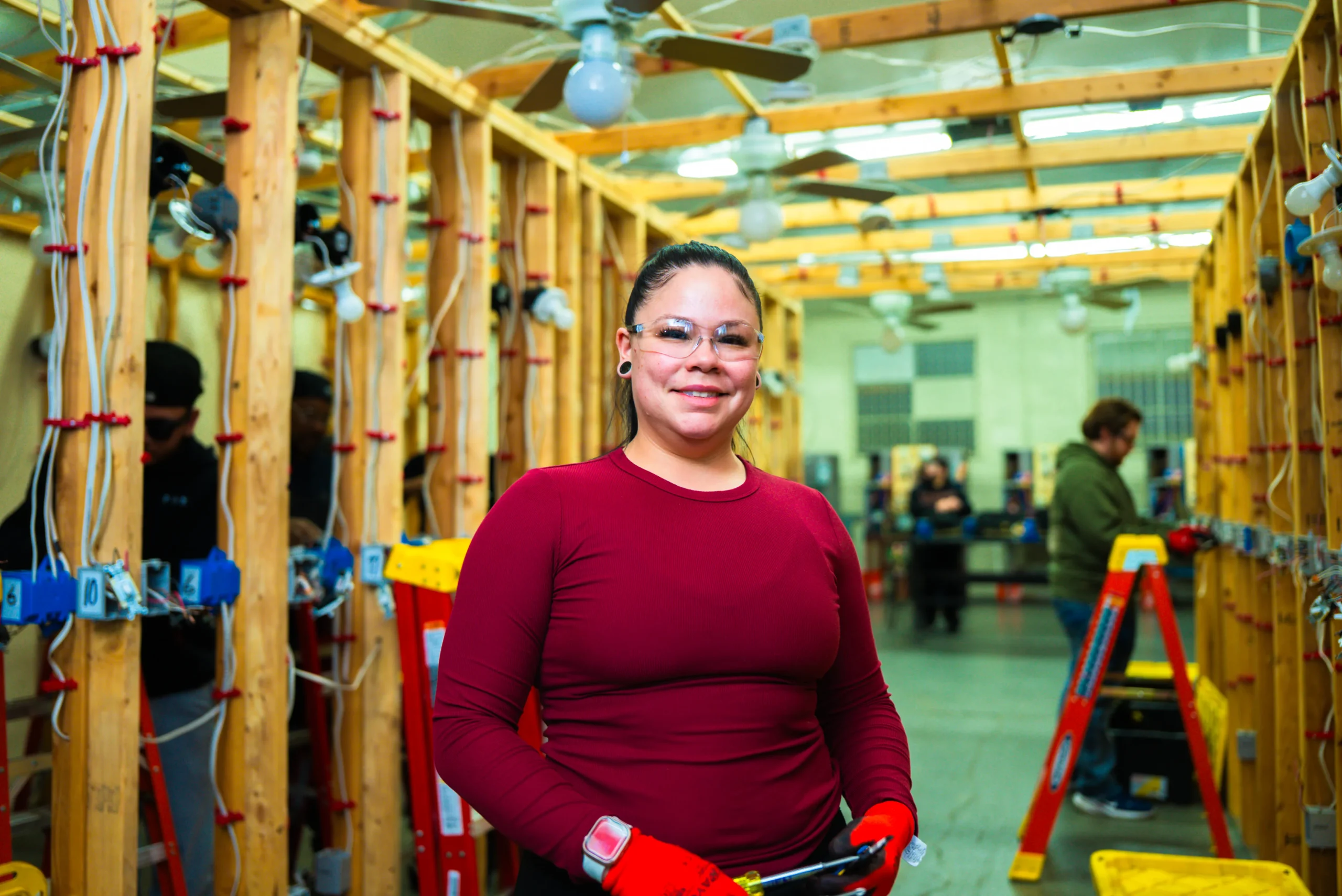
Here is the irony the episode unpacks: the AI boom physically runs on tradespeople. Every data center rising in the Nevada desert is a cathedral of electrical distribution and industrial cooling. Electricians and HVAC technicians build, wire, and maintain them. Then add the electrification wave: EV chargers, heat pumps, and solar-plus-storage. As a result, AI does not replace the trades; it hires them. The technology eliminating other careers is generating work orders for these two.
“But What About Smart Diagnostics?”
Fair question — AI-assisted diagnostics and smart building systems are real and growing. Watch what they actually do, though. They flag anomalies and suggest causes. Then a human with tools, certifications, and judgment must go verify, repair, and test. Diagnostic software makes good technicians faster; it does not make them optional. The techs who learn to use these tools become more valuable, not less — the same way power tools did not replace carpenters.
What AI-Resistance Is Actually Made Of
Strip it down and the trades’ moat has four walls: physical presence (the work happens in unpredictable real places), skilled judgment (every failure is a fresh puzzle), human trust (someone must be let into the home and believed), and licensing/certification (credentials like EPA 608 gate the work to qualified humans). Most careers hold one of those walls. HVAC and electrical work hold all four — which is why they anchor every AI-proof careers list worth reading.
Positioning Yourself Behind the Moat
The move is not complicated: twelve weeks in our HVAC or electrical program, credentials employers filter for, and entry into the shortage described in our trades shortage breakdown. Compare that to betting four years and a loan on a field the next model release might compress — the risk analysis in our trade school vs. college comparison has aged well and keeps aging better.
The Ten-Year Test
Here is a decision tool worth stealing: for any career you are considering, ask what the pessimistic ten-year scenario looks like. For many office paths, the pessimistic case now includes “the software does most of my job.” For HVAC and electrical work, the pessimistic case is roughly “demand grows slower than projected” — while buildings still age, compressors still fail, and the desert still hits 110°F. When the downside scenario of one path resembles the upside scenario of another, the risk math has already made your decision; the only remaining step is acting on it.
Skills That Compound Instead of Depreciate
The deepest difference the episode lands on: in exposed careers, experience can depreciate — the tool that replaces junior analysts eventually pressures senior ones. In the trades, experience compounds without a ceiling in sight: every diagnosed failure makes the next one faster, every strange system joins your mental library, and twenty-year veterans command premiums precisely because their judgment cannot be downloaded. Choosing a trade in 2026 is choosing an asset class where your own experience appreciates — a quiet financial argument that outlasts every hype cycle.
Frequently Asked Questions
What careers are safest from AI?
Occupations combining physical presence, novel environments, skilled judgment, and human trust — installation, maintenance, and repair trades chief among them. HVAC and electrical work hold all four moats simultaneously.
Will robots ever do HVAC or electrical work?
Factory-style automation requires controlled environments; service work happens in unpredictable homes, attics, and plants. Diagnostic AI assists technicians but still requires qualified humans to verify, repair, and certify — making good techs faster, not obsolete.
Is AI creating trade jobs?
Substantially: data centers are electrical and cooling infrastructure at massive scale, and the electrification wave adds EV chargers, heat pumps, and solar-plus-storage work. The AI economy is a net generator of trade work orders.
How do I get into an AI-proof trade?
Train hands-on and credential up: a 12-week program plus EPA 608 (HVAC) or electrical fundamentals puts you behind the automation moat and into a market already short of qualified people.
Build Where the Ground Is Solid
Nobody can promise what the next decade automates — but the safest ground visible today is work that lives in hands, judgment, and trust. Tour our Las Vegas campus, watch the full episode above, and plant your next decade behind the moat. Since 1994, at a tuition that is a fraction of the Las Vegas norm, with financing for nearly every situation.
*Outlook data: U.S. Bureau of Labor Statistics, Occupational Outlook Handbook, Electricians; Heating, Air Conditioning, and Refrigeration Mechanics and Installers (projected employment growth 2025–2035; May 2025 median wages). National data. Individual results vary. This information is not a promise of employment or wages.
