
The Electrician Tool List: What You Actually Need on Day One
Every new electrician asks for a tool list. However, the internet answers with 60-item shopping sprees that cost a month’s rent. Here is the honest version — the electrician tool list our instructors actually recommend. It covers what belongs in your bag on day one and what waits until the job demands it. It also shows how to buy without torching your budget before your first paycheck.
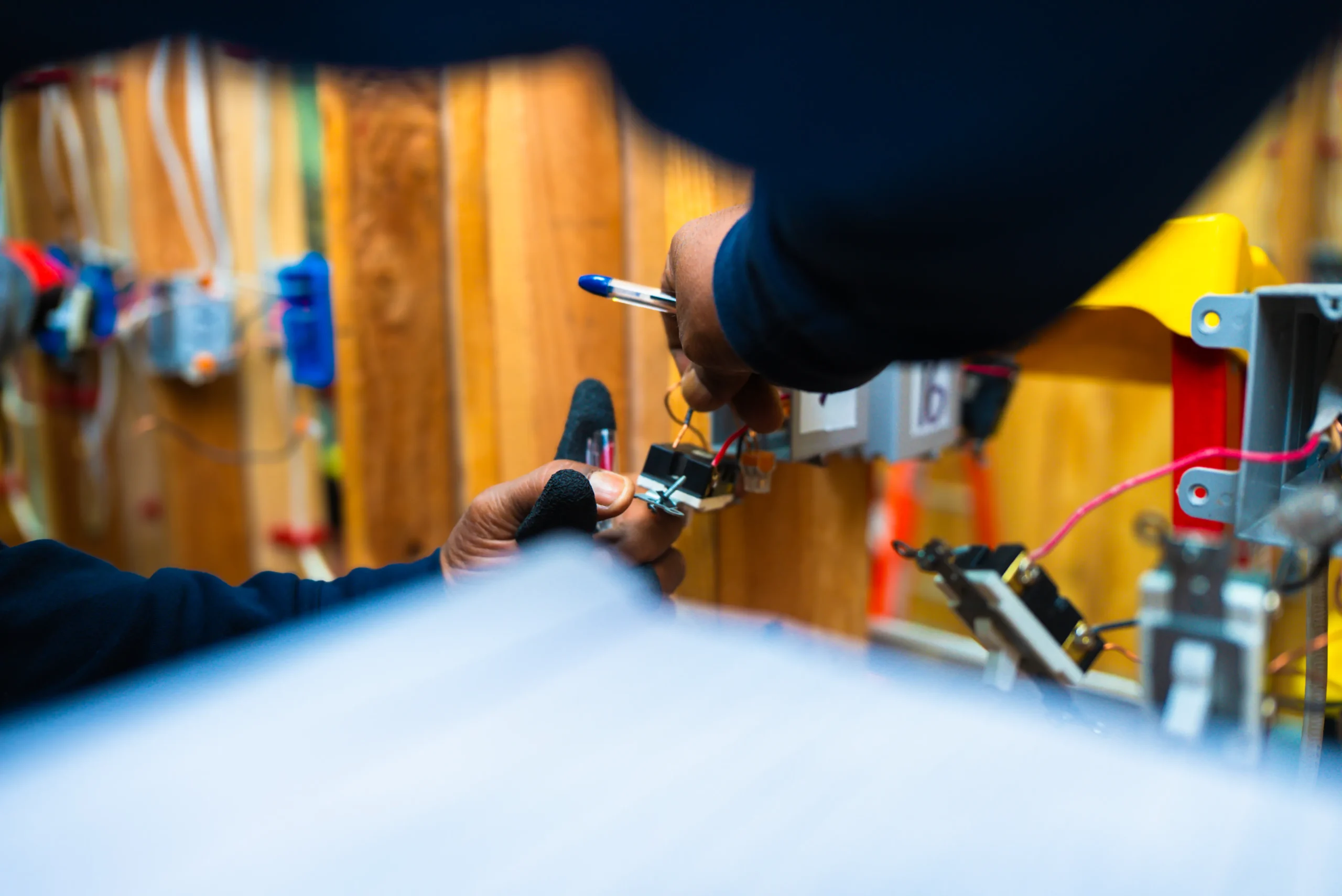
Above: a graduate on arriving at his first job prepared — the feeling this list aims to produce.
The Day-One Kit
- Lineman’s pliers — the workhorse: cutting, twisting, pulling. Buy quality here first.
- Wire strippers — you will use them hundreds of times a week; a comfortable pair pays for itself in your forearms.
- Non-contact voltage tester — the tool that keeps you alive. Never trust a circuit without it.
- Multimeter — a dependable mid-range meter beats a fancy one you cannot read yet.
- Insulated screwdrivers — a driver set with flathead and Phillips in the common sizes.
- Needle-nose pliers, tape measure, utility knife, torpedo level — the small stuff that is somehow always in your hand.
- Headlamp or flashlight — panels live in dark places.
- Tool bag or pouch — organization reads as professionalism on a job site.
That kit fits in one bag and one modest budget — and it covers essentially everything a first-year residential or commercial helper touches.
What to Skip Until the Job Demands It
Conduit benders, knockout sets, fish tapes, power tools beyond a drill — hold off. Employers typically supply specialty and power tools. Meanwhile, the ones you eventually buy should match the work you actually land. For example, a service electrician and a commercial rough-in electrician build very different second-wave kits. Buying speculative tools before your first job is how new electricians spend $800 on steel they carry for a year untouched.
Buy-Smart Rules From Our Instructors
Rule one: buy quality where your hands live — pliers, strippers, drivers — and mid-range everywhere else until experience votes. However, rule two is to watch the veteran electricians on your first crew. Years of carrying mistakes up ladders have edited their bags. Rule three: mark your tools immediately — paint pen or engraver — because job sites eat anonymous tools. Rule four: one good bag beats two mediocre ones; you will carry it ten thousand times.
The Tool That Is Not a Tool
The most valuable thing you can bring to day one is knowing how to use everything above without hesitation. In our 12-week electrical program, every tool on this list gets worn in through lab repetition — wiring receptacles, bending conduit, working panels — so your first employer watches you reach for the right tool automatically. That fluency, more than the brand names in your bag, is what reads as “trained” within an hour of your first shift. It is also what the journeyman path is built on, hour by documented hour, as our Clark County journeyman guide lays out.
What About Cost, Total?
A sensible day-one kit lands in the low hundreds, not the thousands the mega-lists imply — and it is the last cheap entry fee this career charges. Compare that to the earning ladder in our electrician salary guide and the math is comfortable. If budget is tight, mention it during your campus tour — our team has helped students sequence tool purchases around financing plans for decades.
Caring for the Kit That Feeds You
Veteran electricians treat tools like the income-producing assets they are. Wipe them down when they get wet or grimy, keep cutting edges clean, retire strippers when they start nicking conductors, and check your voltage tester against a known-live source regularly — a tester you cannot trust is worse than none. End each week by re-stocking consumables (tape, wire nuts, blades) so Monday never starts with a supply-house detour. Ten minutes of Friday maintenance keeps a day-one kit working for years — and tells every foreman who watches you exactly what kind of tradesperson you are.
The Apprentice Bag Test
A trick our instructors share from their own field years: foremen quietly read new hires by their bags. Not the brands — the logic. Is the tester where a hand finds it without looking? Are the drivers separated from the strippers? Does the kit reflect someone who has actually used it, or someone who bought a list the night before? You cannot fake an organized bag, which is why lab time matters: twelve weeks of daily reps organizes the bag for you, one reach at a time.
Frequently Asked Questions
What tools does a beginner electrician need?
The core day-one kit: lineman\u2019s pliers, wire strippers, a non-contact voltage tester, a multimeter, insulated screwdrivers, needle-nose pliers, tape measure, utility knife, torpedo level, a light, and a decent bag. That covers essentially all first-year helper work.
How much does a starter electrician tool kit cost?
A sensible day-one kit lands in the low hundreds of dollars. Spend the quality money on pliers, strippers, and drivers; go mid-range elsewhere until the job tells you what to upgrade.
Do employers provide tools for electricians?
Employers typically supply power tools and specialty equipment like benders and fish tapes; electricians provide their own hand tools. Ask each employer for their expected list before your first day.
Should I buy tools before starting trade school?
No need — training labs are equipped, and the program teaches you what each tool does before you spend a dollar. Buy your kit near graduation, once your hands know exactly what they are buying.
Learn the Tools Before You Buy Them
The smartest tool purchase is made by hands that already know the difference. Tour our Las Vegas campus, pick up the gear in the lab, and start the program that makes every item on this list feel like an old friend by graduation. Tuition runs a fraction of what most Las Vegas programs charge — leaving room in the budget for very good pliers.
