
Inside Our Skills Lab: Where Hands-On Trade School Gets Literal
Every school says “hands-on.” The phrase costs nothing, which is why our answer to it is a camera. This episode walks straight through the Quality Training Centers skills lab, station by station. That way, you can see what hands-on trade school means when it is literal — and judge for yourself before ever booking a tour.
The Wiring Bays: Houses Without the Houses
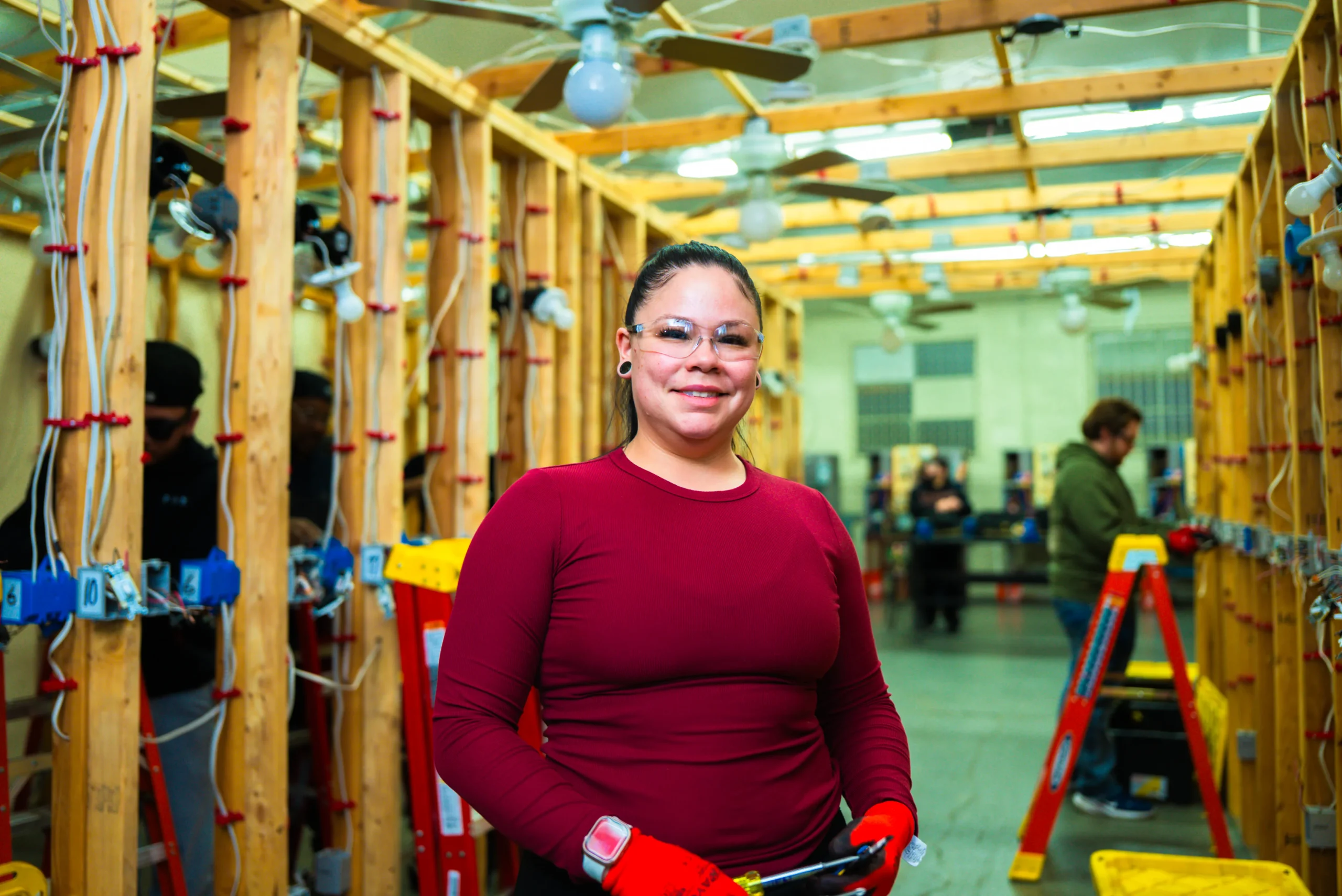
The first thing visitors notice: framed walls, studs exposed, boxes and conduit and ceiling fans everywhere. This is residential wiring reduced to its skeleton. As a result, students run circuits the way they will in the field. Then instructors inspect their work the way real inspectors do. Every bay carries the fingerprints of the last cohort: numbered boxes, practice runs, the occasional creative mistake preserved briefly as a teaching exhibit. Electrical students live here for weeks, and it shows — in the walls and in the graduates.
The Refrigeration Side: Real Units, Real Refrigerant Discipline
Across the floor, the HVAC benches carry working residential and commercial equipment — split systems, package units, the compressors and coils that fill a technician’s actual day. This is where recovery, evacuation, brazing, and charging get drilled under the exact procedures the EPA 608 exam tests — so certification prep is not a separate course but a byproduct of the reps. Students break systems, diagnose systems, and fix systems, because that loop is the job.
Why We Spend Money Here Instead of on Billboards
A trade school’s budget tells its truth: dollars go to marketing or to copper, rarely both. Ours go to the floor you just watched — which is exactly why we tell every prospective student to judge schools by walking their labs unannounced, the advice at the heart of our school comparison guide and the story our four-tours episode confirms from the student side. Equipment with student fingerprints beats brochures with stock photos, every time, in every hiring outcome that follows.
What a Lab Session Actually Feels Like
Not a lecture with props. A typical block: a short demonstration, then hours of doing — instructors like Dave Wojciechowski, Mario Alvarez, Kevin Kennard, and Loran Moulton circulating, correcting grips, asking the “why” questions that turn motions into understanding. We welcome mistakes on purpose. A mis-wired three-way switch in the bay costs a laugh and a redo. However, the same mistake on a job site costs callbacks and reputations. The lab is where errors are cheap — that is its entire economic function.
The Interview Payoff
Every hour on this floor converts directly at hiring time: the working interviews Las Vegas employers love (what they ask) are just lab sessions with stakes, and graduates walk into them having already done the exam a hundred times. That is the quiet arithmetic of hands-on training — it is not a teaching preference, it is pre-paid interview prep, pre-paid first-week competence, and pre-paid safety reflexes (why those matter), all bundled into the same twelve weeks.
The Stations You Will Not See on the Video
Some of the lab’s best teaching happens at stations too mundane to film well. For example, there are the component boards where meters learn to tell the truth, the brazing corner where the first ugly joints become the hundredth clean one, the panel walls where breakers and disconnects get exercised until the sequence is boring — and boring is the goal, because bored hands are safe hands. Visitors always photograph the wiring bays; instructors always point at the boards. Fluency grows in the unglamorous corners, one repetition at a time. That is exactly why the camera undersells what the floor delivers.
A Cohort’s Twelve Weeks, Traced Across the Floor
Watch a cohort move through the space and the curriculum becomes visible: early weeks clustered at the fundamentals stations, mid-program spread across the bays and benches with instructors orbiting, final weeks running diagnosis drills and mock working interviews on equipment their hands now know blind. By graduation the floor has done its quiet work — the same students who photographed everything on day one walk past it all like technicians, because that is what the room was built to manufacture.
Why Age of Equipment Matters Less Than Use of Equipment
One honest note for comparison shoppers: labs are not judged by shininess. Field equipment spans decades, so training stock that mixes generations is a feature — the 15-year-old unit teaches what half the service calls in this valley actually look like, while current equipment covers the new installs and the A2L transition. What disqualifies a lab is not age; it is dust. Equipment nobody touches teaches nobody anything, whatever its model year.
Frequently Asked Questions
What does hands-on trade school actually mean?
The majority of training time spent on real equipment — wiring live-style bays, servicing actual HVAC units — with instructors coaching reps, rather than lectures with occasional demos. Judge any school by walking its lab and watching what students\u2019 hands are doing.
What equipment is in the Quality Training Centers lab?
Framed residential wiring bays with boxes, conduit, and fixtures on the electrical side; working residential and commercial HVAC units, recovery and brazing stations on the refrigeration side — the equipment the first job expects you to know.
Can I see the lab before enrolling?
Yes — the lab is the first stop on every tour, and unannounced visitors are welcome during business hours. The video above is the preview; the floor itself is the proof.
Does lab training really matter to employers?
It is the difference working interviews exist to detect. Lab-trained candidates handle the meter-and-schematic tests calmly because they have done them for weeks — the single fastest route from resume to offer.
Watch the Tour, Then Take the Real One
The video shows the floor; standing on it settles decisions. Book your visit, bring your questions and your skepticism, and compare what you see against every other lab in the valley. Then pick your bench: HVAC or electrical, 12 weeks, tuition a fraction of the Las Vegas norm. The fingerprints on the equipment could be yours by spring.
