
Women in the Trades: Why More Are Choosing HVAC and Electrical
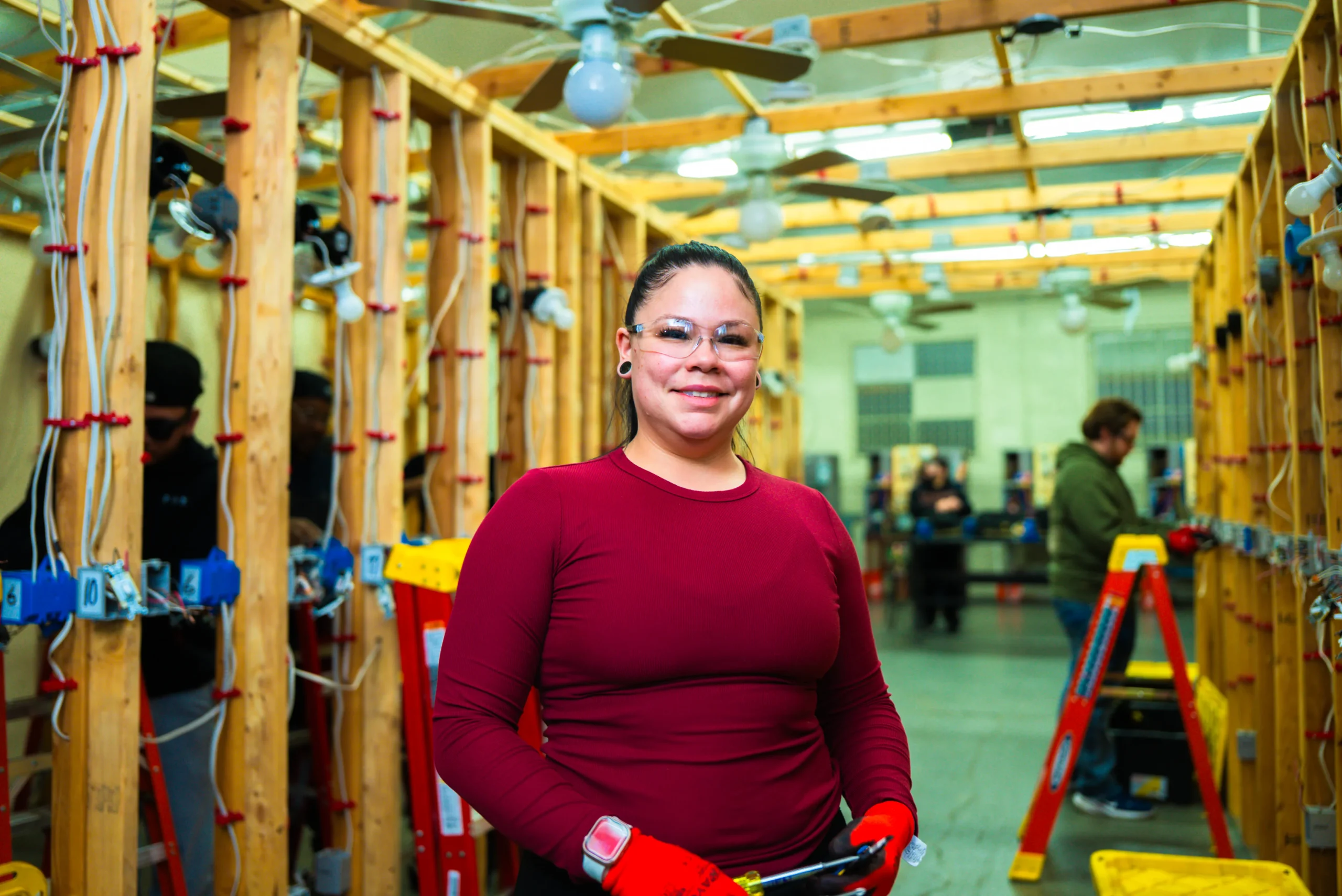
Walk through our Las Vegas lab on any given week and the old stereotype of who belongs in the trades quietly falls apart: women in the trades are the fastest-growing demographic story in skilled work, and the wiring bays and refrigeration benches here reflect it. This post is the honest version of that story — the genuine draws, the real frictions, and what women considering the leap should actually expect.
Why the Growth Is Happening Now
Several currents converged. The trades’ pay transparency — a $61,010 HVAC median and $63,190 electrician median (BLS, May 2025)* — reads differently against pink-collar wage realities than it does against male-dominated alternatives. The labor shortage made employers pragmatists: crews need competent hands, and gatekeeping is a luxury short-staffed companies dropped. And visibility compounds — every woman running service calls normalizes the next one’s application. The door did not so much open as get propped by economics.
What Draws Women, In Their Own Words
The reasons our female students give overlap heavily with everyone’s — pay, speed to earning, work that shows results — with a few notes hit harder: independence (a certified skill negotiates from strength anywhere in the valley), proof (visible competence that shuts down doubt faster than any argument), and problem-solving work described by one student as “puzzles that pay.” Diagnostic service work in particular rewards patience and precision — and customers frequently request the tech who explained things clearly, a lane where many women graduates build formidable reputations fast.
The Frictions, Named Honestly
Pretending the field has no headwinds would insult your intelligence. Some job sites still carry older cultures; proving-ground scrutiny can run hotter for women in their first months; and gear sized for the average male hand is a small, real, daily annoyance the industry is only slowly fixing. What has genuinely shifted: employers competing for scarce talent police their crews better than their predecessors did, and a certified, competent tech accumulates allies with every solved call. The frictions are real, shrinking, and — per our graduates — nowhere near dealbreakers against what the career returns.
The Physical Question, Answered Practically
Yes, the work is physical — and technique carries more of it than raw strength. Leverage, body mechanics, the right tool for the fastener, and smart pacing (especially in the summer heat) matter more than gym numbers, which is why training on real equipment settles the question better than speculation ever could. Twelve weeks in the lab teaches your body exactly what the job asks of it — before any employer is watching.
Support That Actually Exists
The ecosystem has matured: NAWIC’s Las Vegas chapter — whose scholarship partnership with us made local news — along with national groups like Women in HVACR build peer networks, and funding paths from WIOA to standard financing apply equally. At the school level, what matters most is simpler: instructors who coach every set of hands with the same standards, and a placement team that knows which employers’ cultures actually deliver on their talk.
Advice From Women Already In
Compressed from graduates: train hard enough that your work answers questions before they are asked; find one mentor and one peer — the combination covers everything; document your wins the way you would document journeyman hours, because receipts end arguments; and pick employers by asking who their best tech is — if a woman’s name comes back, culture is proven, not promised.
What Changes When the Crew Changes
Employers who have integrated their crews report a pattern worth naming: mixed teams communicate better with customers, document work more carefully, and de-escalate the job-site friction that costs money. That is not sentiment — it is operations. Service businesses live on reviews and repeat customers, and the crews that talk to homeowners like professionals win both. The demographic shift is not charity from the industry; it is the industry noticing what improves its own numbers.
For the Woman Reading This on a Break at a Job She Has Outgrown
You are the person this post was written for. The pay data is public, the demand is documented, the training is twelve weeks with morning and evening options, and the funding paths do not care who applies. The only question that matters is the same one every career changer faces — and the cost-of-waiting math answers it the same way regardless of gender. Come stand in the lab. The stereotype falls apart in person faster than any blog post can manage.
Frequently Asked Questions
Are women entering the trades in significant numbers?
Yes — women are the fastest-growing demographic in several skilled trades, driven by wage transparency, labor shortages that flattened gatekeeping, and compounding visibility as more women work the field.
Is HVAC or electrical work physically realistic for women?
Yes — technique, leverage, and pacing carry more of the trade than raw strength, and hands-on training lets every student prove the physical questions to themselves on real equipment before job one.
Do employers hire women technicians in Las Vegas?
Short-staffed employers hire competence, and many actively recruit women — customer-facing service roles especially value clear communicators, and several graduates report customers requesting them by name.
Are there scholarships or groups for women in the trades?
Yes — organizations like NAWIC (whose Las Vegas chapter has partnered with Quality Training Centers on scholarship support) and Women in HVACR offer networks and resources, alongside standard funding paths like WIOA and financing.
Come See the Lab for Yourself
The most convincing argument is standing in it. Schedule a tour, meet instructors and current students, and judge the culture with your own eyes — then compare the HVAC and electrical programs against anywhere else in the valley. Training every capable set of hands since 1994.
*Wage data: U.S. Bureau of Labor Statistics, Occupational Outlook Handbook, Electricians; Heating, Air Conditioning, and Refrigeration Mechanics and Installers (May 2025 median annual wages). National data. Individual results vary. This information is not a promise of employment or wages.
