
The Day I Almost Lost Two Fingers: Electrical Safety, Taught by a Scar
Safety content usually reads like a laminated poster — rules nobody remembers under deadline. This episode of our podcast is the opposite. A tradesman walks through the day he almost lost two fingers, minute by minute. Then he extracts the electrical safety lessons that laminated posters keep failing to teach. Watch it before your first job; rewatch it before your hundredth.
Anatomy of a Near-Miss
The pattern in his story repeats across almost every trade injury report ever filed: not ignorance, but shortcut. A routine task, done a hundred times. Time pressure humming in the background. One verification skipped because the system was “definitely” dead. Then came the fraction of a second that rearranges a career. He keeps the details for the episode — they land harder in his voice. However, the structure is the lesson: experience does not protect you from shortcuts. Experience is where shortcuts come from.
The Habits That Would Have Prevented It — and Prevent Yours
- Test before touch, every time — the non-contact tester from our tool list costs less than a co-pay and exists for exactly this moment. No exceptions for “obvious” circuits: the obvious ones are the ones that bite.
- Lockout/tagout as ritual, not paperwork — your lock, your key, your pocket. A breaker somebody else can flip is not off; it is waiting.
- Treat every conductor as live until proven otherwise — proof meaning your meter, checked against a known source, in your own hands, this minute.
- Slow is smooth — the seconds saved by skipping verification round to zero; the cost of the miss does not.
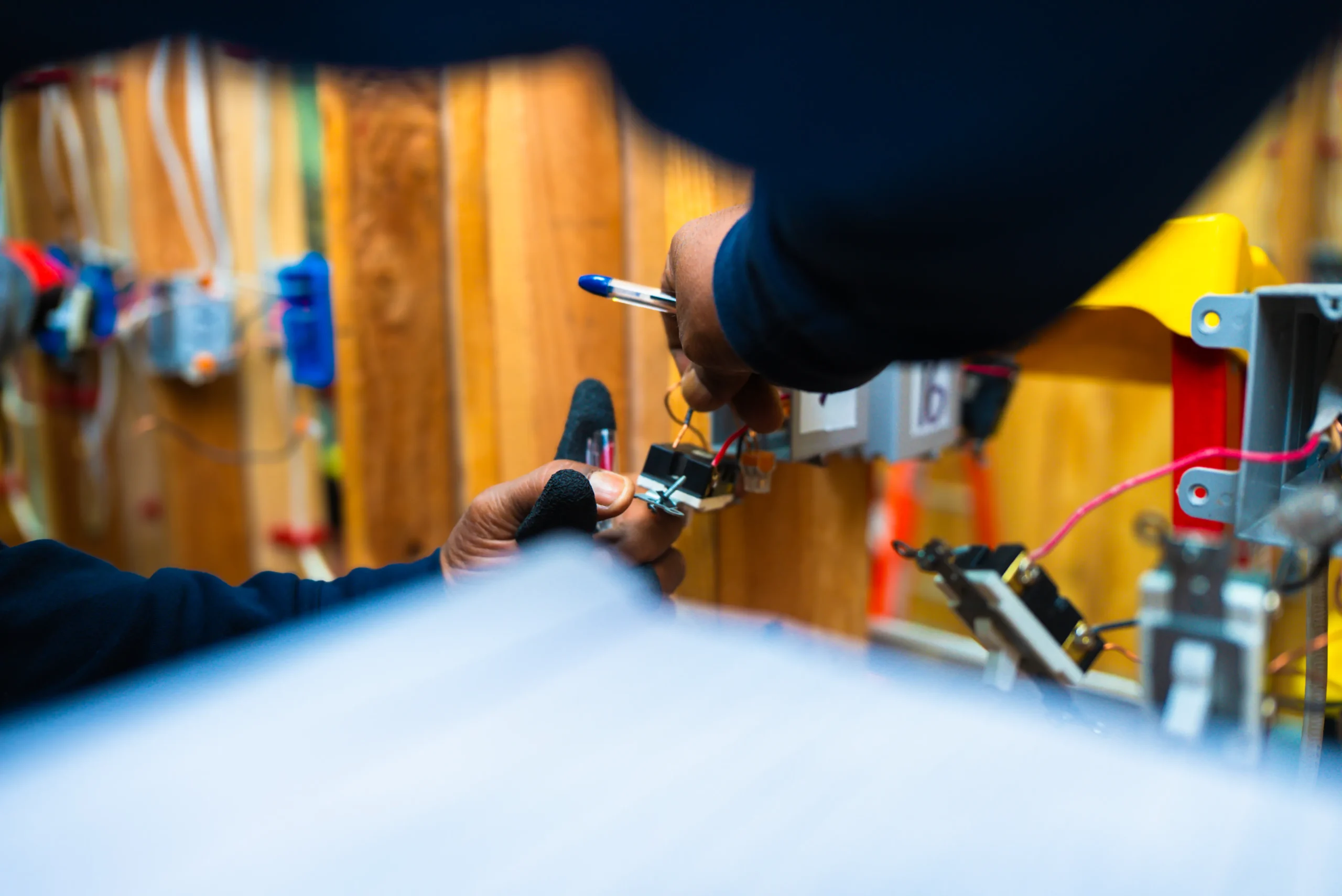
Why Culture Beats Rules
Here is what separates crews that retire whole from crews that collect scars. On good crews, teammates thank the rookie who calls a safety stop instead of mocking him. His near-miss happened partly because the site’s culture treated verification as rookie fussiness. Moreover, he owns, in the episode, that he had absorbed it. When you interview employers (yes, you are interviewing them too — see our placement guide), ask how safety concerns get raised on their crews. The answer predicts your next decade better than the wage does.
Where Safety Instinct Actually Comes From
Not from posters — from repetition where mistakes are cheap. In our labs, we drill test-before-touch until it stops being a decision and becomes a reflex. Our instructors — who carry their own decades of field stories — learned it the same way. That is the deep argument for training before your first job: arriving with safety reflexes pre-installed means the job site’s pressure tests your habits instead of forming them. Pressure is a terrible teacher of first habits.
The Family Math
He closes the episode where safety talk should always close: hands are how tradespeople feed their families, and the trade’s entire compounding ladder — the one mapped in our salary guide — assumes ten working fingers at the top of it. Every verification you perform is a deposit in that account. Skip none.
The Second Near-Miss Nobody Talks About
He makes a subtler point late in the episode that deserves its own heading: the psychological near-miss that follows the physical one. After a close call, some tradespeople swing into fear and leave the trade; others swing into bravado and call it proof they are unbreakable. Both responses waste the lesson. The professional response — the one he models — is systems thinking: what sequence allowed this, and which habit closes the gap permanently? Scars are expensive tuition; extract every dollar of learning they charge.
Safety as a Career Accelerator
The plot twist rookies miss: safety discipline reads as promotability. Foremen hand complex work to the tech whose lockout ritual never wavers, because that consistency predicts everything else — clean terminations, honest documentation, careful customers. The same habits that keep fingers attached also attach names to supervisor shortlists. In a trade where reputation compounds like interest, being the careful one is not the slow lane; it is the fast one wearing safety glasses.
What to Do With This Post
Concretely: watch the episode tonight, then adopt one ritual tomorrow — test before touch, no exceptions, for one week. Habits install one at a time, and that one is the keystone; the rest of the discipline hangs off it. If you are pre-career, bring safety questions on your campus tour and watch which schools light up at the topic versus which recite the poster. The ones that light up are the ones that will keep your hands whole.
PPE: The Unsexy Paragraph That Earns Its Keep
Personal protective equipment gets one honest paragraph: safety glasses live on your face, not your hat brim, because the flying fragment does not schedule an appointment. Gloves matched to the task, voltage-rated where the work demands it. Footwear that grips ladder rungs in July sweat. None of it is comfortable in a Vegas summer; all of it is more comfortable than the alternatives the episode describes. The techs who wear it without being told are the same ones foremen trust without checking.
Frequently Asked Questions
Is electrical work dangerous?
It carries real hazards that real procedures neutralize: testing before touching, lockout/tagout, treating conductors as live until personally verified. Trained technicians following those habits work full careers safely — the danger concentrates where shortcuts do.
What is the most important electrical safety rule?
Test before touch, every single time, with a tester you have verified against a known-live source. Most electrical injuries trace to a skipped verification on a circuit someone was sure about.
What is lockout/tagout?
The practice of locking a de-energized circuit\u2019s disconnect with your own lock and keeping the key on your person, so nobody can re-energize it while you work. Ritualized, it eliminates an entire category of injury.
Does trade school teach electrical safety?
Good programs drill it until it is reflex — Quality Training Centers builds test-before-touch and lockout habits into every lab session, so graduates arrive at job sites with safety instincts pre-installed rather than pressure-formed.
Build the Reflexes Before the Job Tests Them
Tour our Las Vegas campus, watch how safety is woven through the lab work, and start the electrical program where the habits in this post become automatic. Then watch the full episode above — and keep both hands for the whole career. Training safe technicians since 1994.
