
HVAC Interview Questions: What Las Vegas Employers Actually Ask
HVAC interviews are refreshingly honest compared to office ones: less riddle-me-this, more “show me you can think like a technician and show up like a professional.” After decades of debriefing graduates and employers, our placement team knows the HVAC interview questions this valley actually asks. Here they are, with the answers that work — and the working-interview curveball nobody warns rookies about.
The Technical Screeners
Expect versions of these, calibrated to entry level: Walk me through the refrigeration cycle. (They want fluency, not a textbook recitation — compressor, condenser, metering device, evaporator, and what the refrigerant is doing at each stage.) A system runs but does not cool — what do you check first? (They are listening for process: airflow and filter, then charge indicators, then electrical — ordered thinking beats lucky guesses.) What does your EPA 608 let you handle? (Know your certification cold; it is the credential from our 608 guide and fumbling it is disqualifying.) What would you measure to confirm proper cooling? (Temperature split, superheat/subcool language — even conceptual fluency impresses at entry level.)
The Behavioral Tells
The second half sorts professionals from warm bodies: Tell me about a time you dealt with an angry customer. (Service is people under stress — bring one story with a calm ending.) Summer here is brutal — how will you handle attic season? (Honest respect plus a plan — hydration, pacing, early starts — beats bravado; they have heard bravado melt by July, per our summer heat post.) Why HVAC, why now? (Career changers: tell the real story — ceiling, decision, training. It lands as motivation, which employers rank above experience at entry level.)
The Working Interview: Expect It
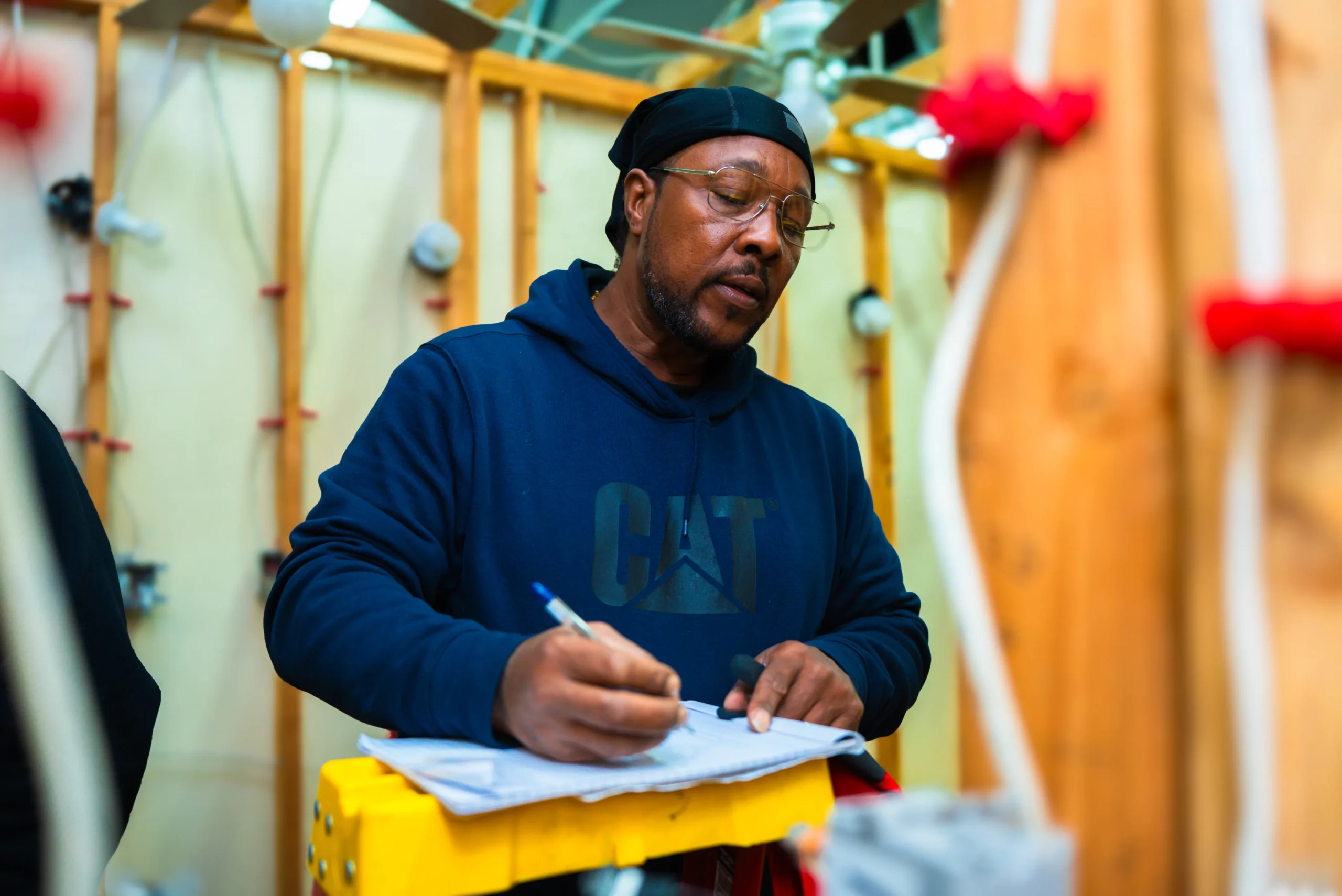
Las Vegas shops love handing candidates a meter mid-interview: check this capacitor, read this schematic, tell me what this gauge says. It is not hazing — it is the cheapest lie detector in hiring, and it is why lab-trained graduates walk in relaxed while video-course certificate holders walk out early. If your hands have done the work (the entire premise of our 12-week program), the working interview is your best friend: it converts training into an offer faster than any resume line.
The Questions You Should Ask Back
Interviews run both directions, and asking sharp questions reads as future-lead material: dispatch structure and on-call rotation (and its pay), tool expectations against our day-one list, sponsored certifications like NATE, ride-along culture for new techs, and — the closer — “what did the last person in this role move up to?” Their answer tells you whether you are joining a ladder or a treadmill.
The Unglamorous Fundamentals
Employers debrief us constantly, and offers die on basics more than technicals: arrive early (they read it as service-call punctuality), dress one notch above the shop floor, bring your certification card and a printed resume, silence the phone, and follow up the same day with two sentences of thanks. In a shortage market (the math), employers are hunting for reasons to say yes. Do not hand them a reason to say no.
A Mock Interview, Annotated
Here is a thirty-second exchange that wins offers, annotated. Interviewer: “System runs, house is warm. Go.” Candidate: “First the cheap stuff — filter, returns, breaker for the condenser. Then I would pull the disconnect and check the capacitor before condemning anything expensive. If electrical checks out, I am looking at charge, and I would rather measure than guess — what does the suction line tell me?” What just happened: ordered thinking (cheap to expensive), safety reflex (disconnect first), diagnostic humility (measure over guess), and engagement (asking the system questions). No encyclopedia required — process is the whole exam.
If You Blank on a Question
It happens, and the recovery is itself a test. The losing move: bluffing, which working interviews expose within a minute. The winning move, verbatim from an employer who hires our graduates: “Tell me you do not know, then tell me how you would find out.” Naming the manual, the schematic, the senior tech, or the manufacturer line reads as safety and coachability — the two traits that predict a rookie’s first year better than any memorized answer. Employers are not hiring finished technicians at entry level; they are hiring trajectories.
The Follow-Up That Closes
Same-day, two sentences, specific: thank them, and reference one thing from the conversation — the ride-along policy, the commercial accounts, the meter they handed you. Specificity proves attention, and attention is the whole job. Our placement team drafts these with graduates precisely because a two-minute email regularly outruns a decade of resume padding.
Frequently Asked Questions
What questions are asked in an entry-level HVAC interview?
A mix of technical screeners (refrigeration cycle, first checks on a no-cool call, EPA 608 scope), behavioral questions (angry customers, summer heat readiness, why HVAC), and often a hands-on working interview with a meter or schematic.
What is a working interview in HVAC?
A hands-on segment where you check a component, read a schematic, or interpret gauges while the interviewer watches. It verifies training claims instantly, which strongly favors lab-trained candidates.
How should I answer “why HVAC?” as a career changer?
Tell the true story concisely: the ceiling in your old work, the deliberate decision, the training you invested in. Employers rank motivation and reliability above experience for entry-level hires.
What should I ask an HVAC employer in an interview?
Dispatch and on-call structure, tool expectations, sponsored certifications, ride-along support for new techs, and what the last person in the role advanced to — questions that identify ladders and mark you as one.
Rehearse Where the Equipment Lives
Every question above is practiced — with real gear and mock interviews — inside our program, which is why graduates keep describing offers that arrived before diplomas (how that works). Tour the campus, meet the placement team, and start the 12 weeks that make interview day feel like a lab day with better clothes.
